
Book review: “Science Nonfiction: Behind The Scenes in University Research”, award-winning scientist Darren J. Lipomi, Ph.D.
November 12, 2026


Balanced. Honest. Family-friendly.

Moore Commissioners voiced the need for establishing zoning officers within the planning board during the Sept. 2 meeting.
The discussion for a Sept. 16 public hearing on rezoning The Garden Center by AOS in Carthage across from Little River Golf & Resort revealed the county’s imposed highway corridor was stealing people’s rights because the business at the property had been selling ceramic lawn ornaments for over forty years in its front yard.
“The powers that be, that write the news, say we [Land Use Plans] are inconsistent,” Vice-Chairman Nick Picerno said about the reason for the rezoning request after the property’s longtime business use.
Laura Araya of The Garden Center by AOS informed Sandhills News by phone that the company purchased the adjoining land to make space for more plants and rock, so they needed to rezone for business zoning.
The Garden Center by AOS asked the planning board to rezone from rural agricultural and residential and agricultural-40 to highway commercial (B-2).
Planning Director Ruth Pederson said the planning board voted four to one against the request to rezone to B-2 because it did not comply with current LUP.
Commissioners said the discussion showed why they needed to complete the new LUP by the end of the year after working on it for two years, and they needed zoning officers to handle the time-consuming requests.
“We have been deeply grateful for the overwhelming support from our community since opening our doors in March 2024. Our hope is that the commissioners will share our vision, recognizing that expanding by 3.59 acres will give a local, family-owned business the ability to continue meeting the growing demand for beautiful plants, landscape and hardscape materials, and a full-service landscaping company that can design, deliver and install with excellence,” Araya texted to Sandhills News.
During presentations, Principal Planner Central Pines Regional Council Karyl Fuller shared updates on rural transportation plans.
The Central Pines Rural Planning Organization is a voluntary association of local governments in Chatham, Lee, Moore and Orange Counties that plans rural transportation systems and advises the North Carolina Department of Transportation (NCDOT) on rural transportation policy.
Fuller’s team produces a newsletter and enters data on transportation planning.
Prioritization Eight is a statewide transportation program, completed every two years through NCDOT, on a two-year cycle. Fuller said she is working on the 2028 cycle.
“Funding is not great, NCDOT has [approximately] $1.6 billion with a statewide competition. Much of that money has gone to Charlotte. Projects are picked up on qualitative scores and public input…I just wanna note here that you guys had concerns, and I had my board submit a contingency that if Moore County wanted to change projects in this round, that you could change one project, but must have permission from the other regions,” Fuller said about the four submitted projects:
At the end of the meeting, Picerno said he read Fire Chief Richardson’s recent editorial in The Pilot, which implied the fire chief thought the fire department was unappreciated.
“It is our duty to make sure we audit, and review of every penny spent of tax dollars. Maybe there was some miscommunication. I’m sorry the press made it into an argument. It should have been handled one-to-one, not going to the paper and fighting a battle in the paper, especially in their editorial board,” Picerno said about editorials being one-sided and the commissioners financially supporting emergency services.
“People need to be accountable…Before you engage your mouth, I would really engage my brain and start asking is it going to come back on me, and how bad is it going to come back on me,” Chair Kurt Cook said about his perspective of inflammatory and aggressive communication and people talking in person, in public or on Facebook or in the press. “We are a democracy and a republic and live by the law…We will not bow to people who want to circumvent the law.”
The First Amendment to the U.S. Constitution protects newspapers from government censorship and ensures the right to report on public officials and matters of public concern. This protection allows the press to cover county commissioners’ meetings, budgets and funding decisions without fear of reprisal.
Court rulings, including the landmark 1964 New York Times v. Sullivan case, have reinforced these protections by requiring public officials to prove “actual malice” if they claim defamation. Alongside federal and state open records and open meetings laws, the First Amendment affirms the press’s role as a watchdog over government actions.
Sept. 2, 2025
Stephanie M. Sellers
Submit news tips and interview candidates to editor@sandhills.news.

Subscribe to get the latest posts sent to your email.









 Sylvan Learning of Southern Pines NC is the investment you make for your child's sake. Education. https://sandhills.news/2025/12/07/sylvan-learning-of-southern-pines/11 months ago


 You can also follow on Instagram to see more.
Follow Sandhills News on Facebook and Instagram to learn the latest in Moore, Lee and Harnett.
We cover family-friendly news.1 year ago
Sandhills News will cover Five Points Horse Trials – Treehouse Event Series Championships today!
Carolina Horse Park, 2814, Montrose Road, Raeford, NC
Carolina Horse Park serves cross country, dressage, jumping and classes with a side of green biscuits from Sept. 5 through Sept. 7.
Love horses? This is where you can enjoy the show and the ambiance equestrians recognize as energy in the air when eventers pass by and revel in their accomplishments and neighs sound another moment of glory—unless they lose. In which case, barn language ensues.
Read the full schedule, plan your days and enjoy! Carolina Horse Park schedule for Sept. 5-7.
Food trucks will be on-site.1 year ago
Moore County Commissioners approve infrastructure upgrades in Pinehurst after Tropical Storm Chantal closed 13 roads and busted a dam in other towns in Moore County. https://sandhills.news/2025/07/16/moore-county-eyes-flooding-solutions-and-approves-1-2m-for-school-turf-projects-as-schools-face-budgets-cuts/1 year ago
Moore, Lee, and Harnett NC opioid settlement funds did not consider residential treatment for women. https://sandhills.news/2025/07/13/sandhills-opioid-funding-misses-the-mark-for-residential-treatment/1 year ago
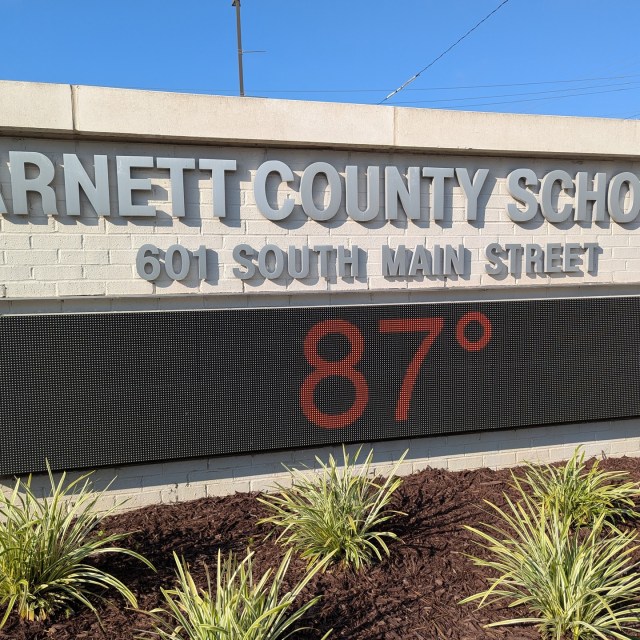
 Harnett County Schools seek community support for student service-learning projects.
https://sandhills.news/2025/07/12/harnett-schools-service-learning-program-invites-community-support/1 year ago
 Angier is home to the Corner Grill and locals who know where to find HOMEMADE food!
https://sandhills.news/2025/07/12/locals-crave-the-corner-grills-chicken-salad-sandwich-and-cheesburgers/1 year ago
 Fred Lee IV wows the crowd at Kiwanis Park in Sanford, NC.
Book him for your next event.
https://sandhills.news/2025/07/14/fred-lee-iv-wins-the-crowd-at-kiwanis-park/1 year ago
Sandhills News loved the bagpipes in the 4 July 2025 Village of Pinehurst Parade!
See all the photos.
https://sandhills.news/2025/07/05/moore-pinehurst-and-whispering-pines-parades-highlight-community-spirit/1 year ago


