
Sandhills Community College to offer pre-employment training with PTT at Hoke Center
November 5, 2026


Balanced. Honest. Family-friendly.

 Bid op: Sanford seeks construction bids for Walter McNeil Jr. Park renovation
November 5, 2026
 Sanford talks Biscuitville in Tramway and Rocket Car Wash on 87
November 5, 2026
 Moore County sets public hearing on UDO food business changes
November 4, 2026
In Dec. 2025, Sandhills News invited candidates in the tri-county municipal elections to participate in interviews. Those who shared email addresses on their candidacy forms were contacted and Sandhills News posted a notice inviting the remaining candidates.
In March, voters elect two candidates for the Nov. 2026 election.
The Tri-County Area School Board Races
Less than a handful of candidates answered interview questions about the school year’s prevailing concerns in Moore, Lee and Harnett county’s school districts.
The carefully researched interview questions help voters know each candidate’s level of commitment, intelligence, problem-solving skills, and ethics, so voters know exactly who they are bringing to the table.
Interview questions included substantive questions relevant to individual school districts for the voters’ awareness, excluding opportunities for campaign grandstanding.
These candidates are genuine, transparent, in for the cause, not the game or climb to fame.
MOORE
Of the Moore County School Board candidates, only two dedicated members of society chose to reveal their qualifications.

Read Moore County School Board candidate Jim Pedersen’s interview here.

Read Moore County School Board candidate David Norris’ interview here.
LEE

One Lee County School Board candidate participated, Alan Rummel. Read his qualifications here.
HARNETT
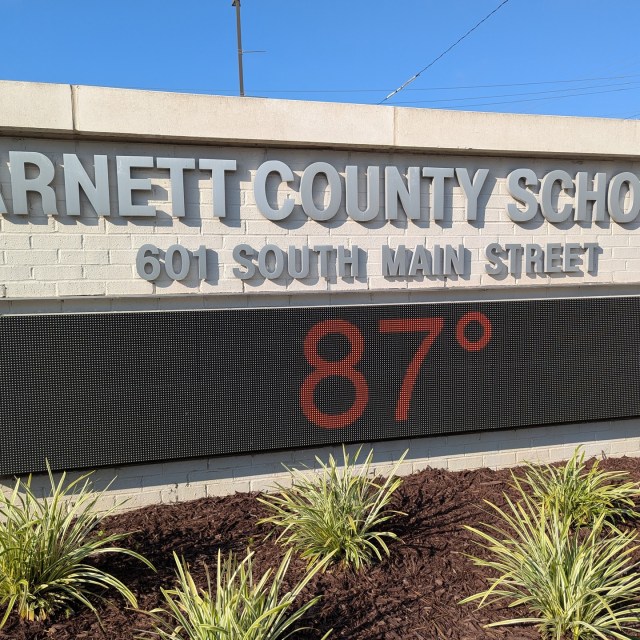
Unsurprisingly, the race for Harnett County School Board saw zero participation from new candidates or existing members running for re-election.
To understand the relevance of this lack of transparency, review the questions below.
Questions for the Harnett County School Board Candidates
Question 1. Read the following and explain your support for oversight committees.
The public has continually complained about the Harnett School Board’s transparency.
Capital Project Concerns
School boards interact with city and county governments, developers, investors, and realtors, sometimes with relatives involved, creating concerns among some residents about potential conflicts of interest or inadequate transparency. For example, through legislation, the school superintendent is allowed to allocate up to $50,000 without a board vote.
Imagine the conflict of interest if a bonus was promised for finding cheap land and the public protested the location. Cheap land usually comes with concerns, including: traffic, industry, distance, cascading students, which is moving them away from friends to different neighborhoods, and can include land with environmental concerns.
Citizen oversight committees, especially in a county with many residents holding security clearances [military], could reduce concerns about confidentiality during land negotiations conducted in closed sessions, something the legislation allows.
Land negotiations are an upcoming reality for Harnett because Dr. Michael Cline, North Carolina’s state demographer, projects population to increase with around 25,000 arriving in the upcoming decade.
Harnett Central Middle School exceeded capacity and is projected to reach nearly 1,800 students within eight years, while Overhills Middle is also approaching capacity. To address this, the school system has greenlit construction of Flatwoods Middle School, a new facility for 1,100 students, budgeted at $78 million.
Given the county’s growing population, one new elementary school will likely be required to keep pace with demographic shifts, and high school capacity may need to be expanded later in the decade. Overall, planning suggests the need for at least two new schools, one middle and one elementary, with high-school expansion to accommodate projected growth.
No Committees and Transparency Concerns
These oversight committees would also increase overall transparency because the Harnett County School Board does not have any committees, obliterating public awareness.
Public awareness is further constricted with limited discourse during the board’s recorded meetings, of which the county residents continually voice concerns.
North Carolina’s general statutes do not allow school boards to enter closed session simply to discuss agenda items or resolve disagreements among its members.
Under North Carolina General Statute 143-318.11, meetings may be closed only for specific purposes: protecting confidential records, consulting with an attorney on legal matters, negotiating real property or employment contracts, or discussing individual personnel issues.
The statute prohibits closed sessions for general policy discussions, even if an attorney is present. No provision in the law allows private meetings for consensus-building, strategic discussion, or avoiding public debate. Agenda items and board disagreements that do not fall squarely within one of the statute’s listed exceptions must be discussed in open session.
In a recent phone conversation, the school board clerk said the school board has its disagreements behind closed doors and was not at fault for its 13 D-rated schools.
Independent oversight groups, unpaid and free from loyalty pressures, could document meetings behind the board’s closed doors with notes and with images of all unedited handout materials for transparency.
Read the deep-dive environmental companion article here.
Answer:
Question 2: In 2025, the number of schools earning a D or F remained unchanged; one school improved from a C to a B, Northwest Harnett Elementary. Read the report overview and 2025 Harnett County Schools’ Grades here.
What strategies would you support to improve Harnett’s 13 D-rated schools?
Answer:
Question 3: What business experience do you bring to the school board to prioritize spending, and do you believe collaborating with municipal boards and the county commissioners would ensure successful outcomes for citizens? Review the information on capital project needs from question one.
Answer:
Question 4: Explain your stance on using sheriff’s deputies as school resource officers.
Answer:
Question 5: What do you see as the most important tasks for the school board at present and in the next four years, and what is your plan to assist?
Answer:
Tri-County Area Commissioner Interviews
Candidates running for county commissioner in Moore, Lee and Harnett were provided with identical questions to reveal their dedication to serving the community, intelligence, problem-solving skills, experience and ethics. Interviews excluded opportunities for campaign rhetoric, instead focusing on concerns related to the tri-county area.
MOORE

Of the candidates currently on the board running for re-election and the new candidates, Moore County had one participant. Read Curtis Self’s interview for the Moore County Commissioner race here.
LEE
0
HARNETT
Of the candidates currently on the board running for re-election and the new candidates, Harnett County had one participant.

Read the candidate interview for Harnett County Commissioner, Eric Stevenson, here.
Feb. 15, 2026
Stephanie M. Sellers
Submit news tips, events and interview requests to editor@sandhills.news.
Sandhills News is plain-English local government reporting that explains how decisions affect your land, taxes, schools and rights.


Subscribe to get the latest posts sent to your email.









 Sylvan Learning of Southern Pines NC is the investment you make for your child's sake. Education. https://sandhills.news/2025/12/07/sylvan-learning-of-southern-pines/11 months ago


 You can also follow on Instagram to see more.
Follow Sandhills News on Facebook and Instagram to learn the latest in Moore, Lee and Harnett.
We cover family-friendly news.12 months ago
Sandhills News will cover Five Points Horse Trials – Treehouse Event Series Championships today!
Carolina Horse Park, 2814, Montrose Road, Raeford, NC
Carolina Horse Park serves cross country, dressage, jumping and classes with a side of green biscuits from Sept. 5 through Sept. 7.
Love horses? This is where you can enjoy the show and the ambiance equestrians recognize as energy in the air when eventers pass by and revel in their accomplishments and neighs sound another moment of glory—unless they lose. In which case, barn language ensues.
Read the full schedule, plan your days and enjoy! Carolina Horse Park schedule for Sept. 5-7.
Food trucks will be on-site.1 year ago
Moore County Commissioners approve infrastructure upgrades in Pinehurst after Tropical Storm Chantal closed 13 roads and busted a dam in other towns in Moore County. https://sandhills.news/2025/07/16/moore-county-eyes-flooding-solutions-and-approves-1-2m-for-school-turf-projects-as-schools-face-budgets-cuts/1 year ago
Moore, Lee, and Harnett NC opioid settlement funds did not consider residential treatment for women. https://sandhills.news/2025/07/13/sandhills-opioid-funding-misses-the-mark-for-residential-treatment/1 year ago
 Harnett County Schools seek community support for student service-learning projects.
https://sandhills.news/2025/07/12/harnett-schools-service-learning-program-invites-community-support/1 year ago
 Angier is home to the Corner Grill and locals who know where to find HOMEMADE food!
https://sandhills.news/2025/07/12/locals-crave-the-corner-grills-chicken-salad-sandwich-and-cheesburgers/1 year ago
 Fred Lee IV wows the crowd at Kiwanis Park in Sanford, NC.
Book him for your next event.
https://sandhills.news/2025/07/14/fred-lee-iv-wins-the-crowd-at-kiwanis-park/1 year ago
Sandhills News loved the bagpipes in the 4 July 2025 Village of Pinehurst Parade!
See all the photos.
https://sandhills.news/2025/07/05/moore-pinehurst-and-whispering-pines-parades-highlight-community-spirit/1 year ago


