Pharoah’s Restaurant & Bar to host Wednesday paint nights
May 1, 2026


Balanced. Honest. Family-friendly.


Let’s rid ourselves of at least 50% of autism. Let’s stop paying for it.
The science is clear. YouTube’s Nick Shirley proved it. At least in Minnesota, a large proportion of autism cases were bogus. No child was ill. The more autism cases that were presented for treatment, the more money the government “dished out.” No one was treated. Unscrupulous people just loaded dishwashers with plates of cash and laundered the money.
Unfortunately, in Minnesota, there was a “red herring” in the mix. That distracting factor was the Somali people. Too many politicians dismissed the Minnesota fraud as the result of poor immigration policy. It was not. On this one, the Democrats were right. To call the Minnesota fraud “Somali fraud” is, in fact, “racist.” And the tragedy of analyzing any problem through the lens of race (a method more common on the left and the right) is that race generally has nothing to do with anything. It blinds us to the real causes of the problems which confront us. In this case, the problem is too much money and too much government. America does not have a racial problem; it has a social welfare problem. It does not give out too little. It gives out too much

This was proven by California’s $22 billion “investment” to eradicate homelessness. There were few, if any, Somalis involved. Yet, the same thing happened. The government appropriated mountains of cash to eradicate homelessness; and not only did it fail to eradicate homelessness, it created more.
The logic is simple. You get what you pay for. Whether it is homelessness or autism, the more you pay, the more you get.

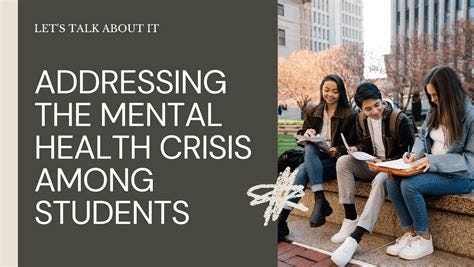
The phenomenon is also national. Beginning at the end of the last century, America “invested” immensely in student mental health treatment. According to a study published by Oxford University Press, “Beginning in the 1980s, mental health programs in schools began to expand…. These expanded school mental health (SMH) programs began to gain momentum in the 1990s and are now a major national force.”
In other words, in the 1980s the government threw a lot of money at what was perceived as a problem of youth mental illness. According to the National Institutes of Health, the result was that the United States had the highest rise in youth suicide of any country in the world. The “investment” had little or no effect on youth crime, the “reading crisis” or youth mental health generally. The problems only got worse.
Too often our empathy becomes our enemy. When Americans discover a group of people victimized by a problem, they ask their government to give aid to the victim. They expect the victim to be aided by that process. Yet there is no follow-up inquiry. No one asks, “Qui Bono?” Who really benefits?

For most government programs, the benefit goes to the provider of the benefit, not necessarily the beneficiary. For instance, the Minnesota fraud did not benefit children with autism nor did its childcare program benefit children in need of childcare. It simply made the providers rich. Similarly, the homeless program in California did nothing to eradicate homelessness, but it made a lot of money for those who supposedly provided homeless services. Nor has the increase in mental health services for school children increased reading or math proficiency. It has not prevented suicide or lessened mental illness. In these cases, and more, there was no benefit to the intended beneficiary. The only benefit was to those who administered the benefits.
Unfortunately, “social” programs are nothing more than a form of “social-ism.” It is the method by which the state (the collective) tries to solve problems. This “warmth of collectivism,” by design, cannot solve problems. It benefits only those who administer the collective… government and government employees.

America needs to take a different approach to problem-solving. The major responsibility for solving almost any social problem needs to rest with the individual. To the extent that charity is required, that charity ought to be funded by individuals and not by the government. And although it may seem harsh, solving the problems that confront most young people ought to be the responsibility of their parents.
We all have empathy for those less fortunate than ourselves. Unfortunately, we see government as the pill to cure the pain that empathy ignites within us. It is a way for us to feel virtuous without exerting the energy and sweat that true empathy should inspire. To paraphrase William Shakespeare, “It is not the stars (or the state) which holds our destiny. Our destiny must be found within ourselves.”

Robert M. Levy PsyschodadRobert@gmail.com Subscribe Free at RLevy.Substack.com
Robert M. Levy grew up in Moore County and graduated from Pinecrest High School. He earned a BA in history and sociology from the University of North Carolina at Chapel Hill, where his honors thesis on the Wilmington Rebellion of 1898 became part of the university’s library collection.
Admitted to the California State Bar in 1978, Levy practiced law for 40 years in California and Maryland, focusing on family and criminal law, including work with juvenile offenders and abused children. His writing on affirmative action appeared in the San Fernando Valley Law Review, and he authored Divorce: A Cynical Experience. He later earned a North Carolina teaching certificate from UNC Charlotte and taught high school social studies across Moore County.
Levy has served as chairman of the Moore County School Board, president of the North Carolina Electoral College, chairman of the Moore County Republican Party, and a columnist for The Pilot in Southern Pines. He lives in Pinehurst with his wife, Linda, and they have three children and four grandchildren.
March 8, 2026
Republished with permission.
Want to submit an editorial for consideration? If you level up with Robert Levy’s quality, send your bio and proposal to editor@sandhills.news.
Submit news tips, events and interview requests to editor@sandhills.news.
Sandhills News is plain-English local government reporting that explains how decisions affect your land, taxes, schools and rights.


Subscribe to get the latest posts sent to your email.









 Sylvan Learning of Southern Pines NC is the investment you make for your child's sake. Education. https://sandhills.news/2025/12/07/sylvan-learning-of-southern-pines/5 months ago

 You can also follow on Instagram to see more.
Follow Sandhills News on Facebook and Instagram to learn the latest in Moore, Lee and Harnett.
We cover family-friendly news.6 months ago
Sandhills News will cover Five Points Horse Trials – Treehouse Event Series Championships today!
Carolina Horse Park, 2814, Montrose Road, Raeford, NC
Carolina Horse Park serves cross country, dressage, jumping and classes with a side of green biscuits from Sept. 5 through Sept. 7.
Love horses? This is where you can enjoy the show and the ambiance equestrians recognize as energy in the air when eventers pass by and revel in their accomplishments and neighs sound another moment of glory—unless they lose. In which case, barn language ensues.
Read the full schedule, plan your days and enjoy! Carolina Horse Park schedule for Sept. 5-7.
Food trucks will be on-site.8 months ago
Moore County Commissioners approve infrastructure upgrades in Pinehurst after Tropical Storm Chantal closed 13 roads and busted a dam in other towns in Moore County. https://sandhills.news/2025/07/16/moore-county-eyes-flooding-solutions-and-approves-1-2m-for-school-turf-projects-as-schools-face-budgets-cuts/10 months ago
Moore, Lee, and Harnett NC opioid settlement funds did not consider residential treatment for women. https://sandhills.news/2025/07/13/sandhills-opioid-funding-misses-the-mark-for-residential-treatment/10 months ago
You can also follow on Instagram to see more.
Follow Sandhills News on Facebook and Instagram to learn the latest in Moore, Lee and Harnett.
We cover family-friendly news.6 months ago
Sandhills News will cover Five Points Horse Trials – Treehouse Event Series Championships today!
Carolina Horse Park, 2814, Montrose Road, Raeford, NC
Carolina Horse Park serves cross country, dressage, jumping and classes with a side of green biscuits from Sept. 5 through Sept. 7.
Love horses? This is where you can enjoy the show and the ambiance equestrians recognize as energy in the air when eventers pass by and revel in their accomplishments and neighs sound another moment of glory—unless they lose. In which case, barn language ensues.
Read the full schedule, plan your days and enjoy! Carolina Horse Park schedule for Sept. 5-7.
Food trucks will be on-site.8 months ago
Moore County Commissioners approve infrastructure upgrades in Pinehurst after Tropical Storm Chantal closed 13 roads and busted a dam in other towns in Moore County. https://sandhills.news/2025/07/16/moore-county-eyes-flooding-solutions-and-approves-1-2m-for-school-turf-projects-as-schools-face-budgets-cuts/10 months ago
Moore, Lee, and Harnett NC opioid settlement funds did not consider residential treatment for women. https://sandhills.news/2025/07/13/sandhills-opioid-funding-misses-the-mark-for-residential-treatment/10 months ago Harnett County Schools seek community support for student service-learning projects.
https://sandhills.news/2025/07/12/harnett-schools-service-learning-program-invites-community-support/10 months ago
Harnett County Schools seek community support for student service-learning projects.
https://sandhills.news/2025/07/12/harnett-schools-service-learning-program-invites-community-support/10 months ago Angier is home to the Corner Grill and locals who know where to find HOMEMADE food!
https://sandhills.news/2025/07/12/locals-crave-the-corner-grills-chicken-salad-sandwich-and-cheesburgers/10 months ago
Angier is home to the Corner Grill and locals who know where to find HOMEMADE food!
https://sandhills.news/2025/07/12/locals-crave-the-corner-grills-chicken-salad-sandwich-and-cheesburgers/10 months ago Fred Lee IV wows the crowd at Kiwanis Park in Sanford, NC.
Book him for your next event.
https://sandhills.news/2025/07/14/fred-lee-iv-wins-the-crowd-at-kiwanis-park/10 months ago
Sandhills News loved the bagpipes in the 4 July 2025 Village of Pinehurst Parade!
See all the photos.
https://sandhills.news/2025/07/05/moore-pinehurst-and-whispering-pines-parades-highlight-community-spirit/10 months ago
Fred Lee IV wows the crowd at Kiwanis Park in Sanford, NC.
Book him for your next event.
https://sandhills.news/2025/07/14/fred-lee-iv-wins-the-crowd-at-kiwanis-park/10 months ago
Sandhills News loved the bagpipes in the 4 July 2025 Village of Pinehurst Parade!
See all the photos.
https://sandhills.news/2025/07/05/moore-pinehurst-and-whispering-pines-parades-highlight-community-spirit/10 months ago