
Euthanasia rates rise at Lee County Animal Shelter & advocates suggest a 5-step plan
September 17, 2026


Balanced. Honest. Family-friendly.

 He worked for Trump. Then Rich Logis left MAGA
September 17, 2026
He worked for Trump. Then Rich Logis left MAGA
September 17, 2026
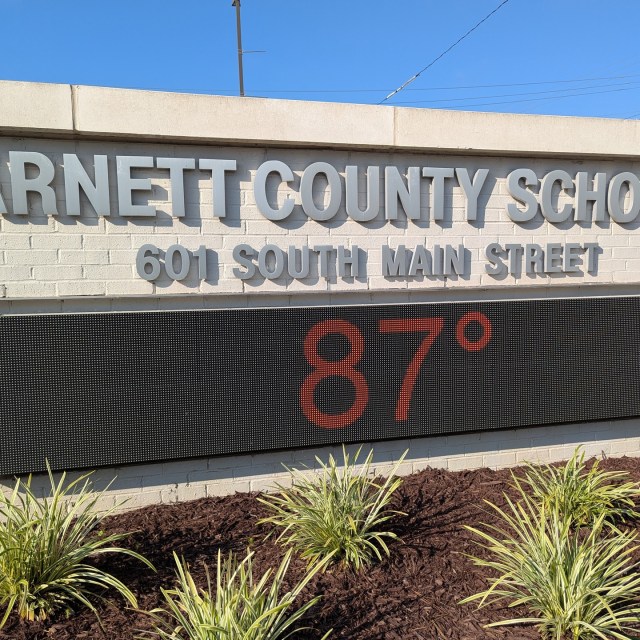
 Harnett County hears 175-home proposal, approve $500K PFAS funding
September 16, 2026
Harnett County hears 175-home proposal, approve $500K PFAS funding
September 16, 2026
Harnett County hears 175-home proposal, approve $500K PFAS funding
September 16, 2026
Harnett County hears 175-home proposal, approve $500K PFAS funding
September 16, 2026


Animal welfare advocates spoke to the Lee County Health Department on county accountability at the Sept. 16 meeting. The advocates presented a five-step strategy to reduce shelter crowding, improve transparency and increase adoptions, citing rising euthanasia numbers despite declining animal intake.
Advocate Kandy Mimande reported the Lee County Animal Shelter had 1,651 dogs and cat entering and 111 euthanized in 2023. In 2025, intake dropped to 1,431, but euthanasia rose to 207. At the same time, operating expenses rose about 30%.
In 2026, from Jan. through Aug., the shelter had 837 intakes and 128 euthanasias. Fifty animals were deemed unadoptable, their health was not recorded and the county said the reason was space.

Mimande suggested a five-step strategy.
Publish a monthly public dashboard showing intake, outcomes, euthanasia reasons, foster placements and length of stay. Data helps identify problems to develop reasonable protocols.
Establish a community-cat program based on ordinances in Wake and Durham counties. Sterilize, vaccinate and return eligible cats to reduce repeated intake and preserve shelter space.
Create a finder-to-foster pathway. North Carolina law already allows animals to be place with approved fosters, rescues or finders during the holding period. Guilford County uses this approach to keep suitable animals out of crowded kennels.
Direct the county attorney and animal services to develop legally sound sterilization and microchip proposals to improve identification, reunification and responsible placement.
Launch a pilot program to install a volunteer animal rescue liaison position in the animal shelter to increase rescues.
“I ask the board to recommend a 60-day working group with animal services, rescue partners, veterinarians, foster volunteers, county staff and the county attorney. Please return with a public dashboard, a finder-foster protocol, a community-cat framework, and legally reviewed sterilization and microchip options. These are concrete ways to address crowding upstream while protecting public safety and due process,” Mimande.
Advocates repeated how spaying and neutering animals prior to adoption helped stop needless suffering from overpopulation. They shared cases of animals adopted out of the Lee County Animal Shelter after people signed documents agreeing to have animals altered and paid a $50 deposit, only for the animals to be returned unaltered. Lee County Animal Shelter staff is supposed to track the adopted animals to ensure they are altered, but they do not have time.
Pre-altered dogs stay about four days fewer and cats about 11 days fewer, according to Shelter Animals Count.
According to Best Friends Animal Society, altered animals are 25% more likely to be adopted.
Shorter stays lower expenses, reduce staff workload and free kennel space.


Read Lee County restricts animal shelter inquiry process after calls of concern and
Lee County Animal Shelter “restores” communication with rescue groups.

Slide presentation images provided by the animal advocates.
Sept. 17, 2026
Stephanie M. Sellers
Subscribe to Sandhills News and support this conservative journalism with advertising.
Submit news tips, events and interview requests to editor@sandhills.news.
Sandhills News is plain-English local government reporting that explains how decisions affect your land, taxes, schools and rights.
Why are surrounding counties reducing shelter crowding with spay-and-neuter, but Lee County is not?
Animal welfare advocates said sterilization before adoption, community-cat programs and stronger foster pathways could reduce shelter stays, expenses and euthanasia in Lee County.


Subscribe to get the latest posts sent to your email.









 Sylvan Learning of Southern Pines NC is the investment you make for your child's sake. Education. https://sandhills.news/2025/12/07/sylvan-learning-of-southern-pines/9 months ago

 You can also follow on Instagram to see more.
Follow Sandhills News on Facebook and Instagram to learn the latest in Moore, Lee and Harnett.
We cover family-friendly news.10 months ago
Sandhills News will cover Five Points Horse Trials – Treehouse Event Series Championships today!
Carolina Horse Park, 2814, Montrose Road, Raeford, NC
Carolina Horse Park serves cross country, dressage, jumping and classes with a side of green biscuits from Sept. 5 through Sept. 7.
Love horses? This is where you can enjoy the show and the ambiance equestrians recognize as energy in the air when eventers pass by and revel in their accomplishments and neighs sound another moment of glory—unless they lose. In which case, barn language ensues.
Read the full schedule, plan your days and enjoy! Carolina Horse Park schedule for Sept. 5-7.
Food trucks will be on-site.1 year ago
Moore County Commissioners approve infrastructure upgrades in Pinehurst after Tropical Storm Chantal closed 13 roads and busted a dam in other towns in Moore County. https://sandhills.news/2025/07/16/moore-county-eyes-flooding-solutions-and-approves-1-2m-for-school-turf-projects-as-schools-face-budgets-cuts/1 year ago
Moore, Lee, and Harnett NC opioid settlement funds did not consider residential treatment for women. https://sandhills.news/2025/07/13/sandhills-opioid-funding-misses-the-mark-for-residential-treatment/1 year ago
You can also follow on Instagram to see more.
Follow Sandhills News on Facebook and Instagram to learn the latest in Moore, Lee and Harnett.
We cover family-friendly news.10 months ago
Sandhills News will cover Five Points Horse Trials – Treehouse Event Series Championships today!
Carolina Horse Park, 2814, Montrose Road, Raeford, NC
Carolina Horse Park serves cross country, dressage, jumping and classes with a side of green biscuits from Sept. 5 through Sept. 7.
Love horses? This is where you can enjoy the show and the ambiance equestrians recognize as energy in the air when eventers pass by and revel in their accomplishments and neighs sound another moment of glory—unless they lose. In which case, barn language ensues.
Read the full schedule, plan your days and enjoy! Carolina Horse Park schedule for Sept. 5-7.
Food trucks will be on-site.1 year ago
Moore County Commissioners approve infrastructure upgrades in Pinehurst after Tropical Storm Chantal closed 13 roads and busted a dam in other towns in Moore County. https://sandhills.news/2025/07/16/moore-county-eyes-flooding-solutions-and-approves-1-2m-for-school-turf-projects-as-schools-face-budgets-cuts/1 year ago
Moore, Lee, and Harnett NC opioid settlement funds did not consider residential treatment for women. https://sandhills.news/2025/07/13/sandhills-opioid-funding-misses-the-mark-for-residential-treatment/1 year ago Harnett County Schools seek community support for student service-learning projects.
https://sandhills.news/2025/07/12/harnett-schools-service-learning-program-invites-community-support/1 year ago
Harnett County Schools seek community support for student service-learning projects.
https://sandhills.news/2025/07/12/harnett-schools-service-learning-program-invites-community-support/1 year ago Angier is home to the Corner Grill and locals who know where to find HOMEMADE food!
https://sandhills.news/2025/07/12/locals-crave-the-corner-grills-chicken-salad-sandwich-and-cheesburgers/1 year ago
Angier is home to the Corner Grill and locals who know where to find HOMEMADE food!
https://sandhills.news/2025/07/12/locals-crave-the-corner-grills-chicken-salad-sandwich-and-cheesburgers/1 year ago Fred Lee IV wows the crowd at Kiwanis Park in Sanford, NC.
Book him for your next event.
https://sandhills.news/2025/07/14/fred-lee-iv-wins-the-crowd-at-kiwanis-park/1 year ago
Sandhills News loved the bagpipes in the 4 July 2025 Village of Pinehurst Parade!
See all the photos.
https://sandhills.news/2025/07/05/moore-pinehurst-and-whispering-pines-parades-highlight-community-spirit/1 year ago
Fred Lee IV wows the crowd at Kiwanis Park in Sanford, NC.
Book him for your next event.
https://sandhills.news/2025/07/14/fred-lee-iv-wins-the-crowd-at-kiwanis-park/1 year ago
Sandhills News loved the bagpipes in the 4 July 2025 Village of Pinehurst Parade!
See all the photos.
https://sandhills.news/2025/07/05/moore-pinehurst-and-whispering-pines-parades-highlight-community-spirit/1 year ago


