
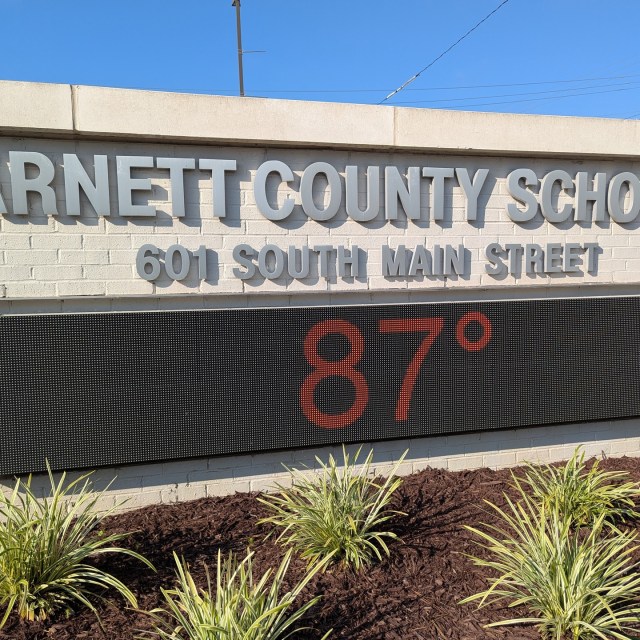
Harnett County budget advances as library funding and social services staffing face scrutiny
June 5, 2026


Balanced. Honest. Family-friendly.


A group of five Lee County residents, joined by two environmental advocates, addressed commissioners Nov. 17 to request renewed moratoriums on fracking and drilling, responding to recent reports that a company with cryptocurrency ties is exploring North Carolina’s first commercial natural gas well to power a data center.
The public comments came during a meeting in which commissioners spent more than 2 hours discussing a $12 million price difference in the EMS provider contract between FirstHealth and MedEx. Commissioners passed a motion to have a work session on Dec. 19 with the EMS Advisory Board rather than select a franchise.
Residents raised concerns about water quality, public health impacts and inadequate regulatory oversight following an investigation by Lisa Sorg with Inside Climate News that revealed Deep River Data is considering drilling Butler Well No. 3.
Originally drilled in 1998, Butler is one of several wells dug over the years in Lee County by oil and gas prospectors, near the Lee-Chatham county line.
The company states that it will use conventional drilling rather than hydraulic fracturing, also known as fracking, to extract natural gas for artificial intelligence workloads, i.e., data centers.
“Our river is already compromised. Twenty-three miles of the [Deep] river are on the federal list of polluted riverbanks,” said Debbie Hall, an environmentalist with Clean Water for NC and the granddaughter of a mine worker whose brother died in the state’s deadliest mine explosion in 1925. “It has the potential to release harmful chemicals into our river, harming us, harming wildlife, harming everything,” she stated firmly into the microphone.
“This county has a long history of mining and mining disasters. I know we cannot say no to everything that comes to us, but I am asking you to say no to this right now. Help protect people and resources by enacting a two-year moratorium on fracking and drilling,” Hall said. The Deep River and its tributaries provide drinking water to approximately 250,000 people in central North Carolina. Nearly 23 miles are listed on the federal impaired waters list, and the river contains 1,4-Dioxane discharged from Asheboro’s wastewater treatment plant.

In 2020, state testing found extremely high concentrations of PFAS chemicals in the Deep River near Sanford.
The Deep River Riverkeeper, Stephanie Stephens, warned of a lack of transparency around data center impacts. “The energy production is temporary, but the impacts on people are forever,” she said.
Keely Puricz, another Deep River advocate, raised an issue with community awareness following a door-knocking event with residents directly affected by the Butler Well development. “I realized most of them didn’t even realize what fracking was, or that they don’t own their mineral rights.” She also raised questions about the North Carolina Department of Environmental Quality’s regulatory capacity while requesting a two-year moratorium on both fracking and data center permits.
Donna Strickland highlighted Lee County’s rapid growth and concerns about proximity. The 2020 census data shows the county’s population was 63,285. The 2023 American Community Survey estimates the population at 67,059.
“Many live within two miles of the well,” Strickland said, raising concerns about fracking’s impacts on “air pollution and water contamination, where wells receive seepage of gas such that people’s tap water catches fire, and cause earthquakes,” adding that “people living near and around fracking wells develop more cancer illnesses than those that don’t.”
Lib Hutchby, whose comments were read by board chair Kirk Smith, emphasized the importance of community awareness. “If I were a new homeowner, I would really appreciate being educated about the facts of the historic Coal Glen explosion,” she said.
“What steps will the Lee County commissioners take to educate new homeowners about the history of the catastrophic explosions, and how will you protect them from reopening old Butler No. 3? Don’t you think it’s more important to protect new homeowners rather than an old oil well?”
Lee County previously enacted two-year fracking moratoria in 2017 and 2019, both of which have since expired. Butler Well No. 3 was initially drilled in 1998 but never produced commercially. The well is located on mineral rights owned by Dan Butler, whose grandfather supervised the Coal Glen Mine in Chatham County when it exploded in 1925, killing 53 men.
The Deep River flows roughly 125 miles through six counties of the Piedmont Region: Forsyth, Guilford, Randolph, Moore, Lee and Chatham.
Deep River Data, incorporated in April 2024, has officers who work in the cryptocurrency industry. Company adviser Dan Spuller told Inside Climate News the project remains in a “pre-feasibility phase” with no permits approved or applied for yet.
Commissioners took no action on the moratorium requests Monday night.
The next meeting is Dec. 1 at noon at the Ruby McSwain Center, 2420 Tramway Road, Sanford.
Nov. 18, 2025
Diara J. Townes
Journalist

Diara is an award-winning journalist covering environment, government & business, with a focus on marginalized communities and local stories.


Subscribe to get the latest posts sent to your email.









 Sylvan Learning of Southern Pines NC is the investment you make for your child's sake. Education. https://sandhills.news/2025/12/07/sylvan-learning-of-southern-pines/6 months ago

 You can also follow on Instagram to see more.
Follow Sandhills News on Facebook and Instagram to learn the latest in Moore, Lee and Harnett.
We cover family-friendly news.7 months ago
Sandhills News will cover Five Points Horse Trials – Treehouse Event Series Championships today!
Carolina Horse Park, 2814, Montrose Road, Raeford, NC
Carolina Horse Park serves cross country, dressage, jumping and classes with a side of green biscuits from Sept. 5 through Sept. 7.
Love horses? This is where you can enjoy the show and the ambiance equestrians recognize as energy in the air when eventers pass by and revel in their accomplishments and neighs sound another moment of glory—unless they lose. In which case, barn language ensues.
Read the full schedule, plan your days and enjoy! Carolina Horse Park schedule for Sept. 5-7.
Food trucks will be on-site.9 months ago
Moore County Commissioners approve infrastructure upgrades in Pinehurst after Tropical Storm Chantal closed 13 roads and busted a dam in other towns in Moore County. https://sandhills.news/2025/07/16/moore-county-eyes-flooding-solutions-and-approves-1-2m-for-school-turf-projects-as-schools-face-budgets-cuts/11 months ago
Moore, Lee, and Harnett NC opioid settlement funds did not consider residential treatment for women. https://sandhills.news/2025/07/13/sandhills-opioid-funding-misses-the-mark-for-residential-treatment/11 months ago
You can also follow on Instagram to see more.
Follow Sandhills News on Facebook and Instagram to learn the latest in Moore, Lee and Harnett.
We cover family-friendly news.7 months ago
Sandhills News will cover Five Points Horse Trials – Treehouse Event Series Championships today!
Carolina Horse Park, 2814, Montrose Road, Raeford, NC
Carolina Horse Park serves cross country, dressage, jumping and classes with a side of green biscuits from Sept. 5 through Sept. 7.
Love horses? This is where you can enjoy the show and the ambiance equestrians recognize as energy in the air when eventers pass by and revel in their accomplishments and neighs sound another moment of glory—unless they lose. In which case, barn language ensues.
Read the full schedule, plan your days and enjoy! Carolina Horse Park schedule for Sept. 5-7.
Food trucks will be on-site.9 months ago
Moore County Commissioners approve infrastructure upgrades in Pinehurst after Tropical Storm Chantal closed 13 roads and busted a dam in other towns in Moore County. https://sandhills.news/2025/07/16/moore-county-eyes-flooding-solutions-and-approves-1-2m-for-school-turf-projects-as-schools-face-budgets-cuts/11 months ago
Moore, Lee, and Harnett NC opioid settlement funds did not consider residential treatment for women. https://sandhills.news/2025/07/13/sandhills-opioid-funding-misses-the-mark-for-residential-treatment/11 months ago Harnett County Schools seek community support for student service-learning projects.
https://sandhills.news/2025/07/12/harnett-schools-service-learning-program-invites-community-support/11 months ago
Harnett County Schools seek community support for student service-learning projects.
https://sandhills.news/2025/07/12/harnett-schools-service-learning-program-invites-community-support/11 months ago Angier is home to the Corner Grill and locals who know where to find HOMEMADE food!
https://sandhills.news/2025/07/12/locals-crave-the-corner-grills-chicken-salad-sandwich-and-cheesburgers/11 months ago
Angier is home to the Corner Grill and locals who know where to find HOMEMADE food!
https://sandhills.news/2025/07/12/locals-crave-the-corner-grills-chicken-salad-sandwich-and-cheesburgers/11 months ago Fred Lee IV wows the crowd at Kiwanis Park in Sanford, NC.
Book him for your next event.
https://sandhills.news/2025/07/14/fred-lee-iv-wins-the-crowd-at-kiwanis-park/11 months ago
Sandhills News loved the bagpipes in the 4 July 2025 Village of Pinehurst Parade!
See all the photos.
https://sandhills.news/2025/07/05/moore-pinehurst-and-whispering-pines-parades-highlight-community-spirit/11 months ago
Fred Lee IV wows the crowd at Kiwanis Park in Sanford, NC.
Book him for your next event.
https://sandhills.news/2025/07/14/fred-lee-iv-wins-the-crowd-at-kiwanis-park/11 months ago
Sandhills News loved the bagpipes in the 4 July 2025 Village of Pinehurst Parade!
See all the photos.
https://sandhills.news/2025/07/05/moore-pinehurst-and-whispering-pines-parades-highlight-community-spirit/11 months ago


