
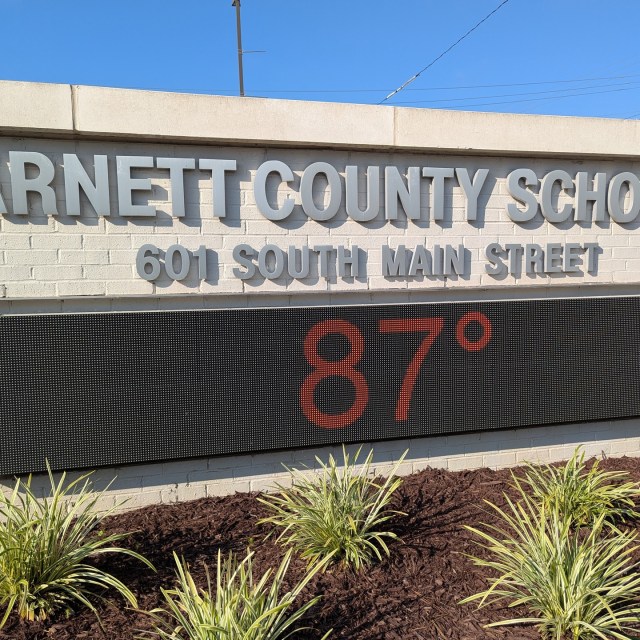
Harnett County citizens oppose tax hikes; Chairman Jaggers plans developer impact fees
April 7, 2026


Balanced. Honest. Family-friendly.


The Lee County Board of Commissioners heard a proposal on Feb. 16 to amend floodplain amendments to preserve and strengthen disaster aid. This is ultimately a downer for contractors.
Senior Planner Amy McNeill proposed tighter floodplain rules to raise building elevations four feet above base flood level. She asked the board to adopt new FEMA maps and add verbiage to support the new maps. While the modifications increase construction costs, they add long-term protection for access to federal insurance and disaster funds.
The proposed amendment would replace Article 13 of the Unified Development Ordinance with the latest Flood Damage Prevention Ordinance from the North Carolina Floodplain Mapping Program.
The updates would preserve Lee County’s compliance with FEMA and allow residents to continue buying federal flood insurance.
The amendment would increase the required elevation of the first finished floor, aka the regulatory flood protection elevation, to four feet above base flood elevation.
In Sanford, they have required two feet above base flood level, and in unincorporated Lee County, homes could be built at base flood elevation.
McNeil said the increased height would reduce flood damage risks and may eventually lower insurance costs.
Contractors may not be so pleased.
The amendments would increase construction costs because they would require taller foundations and costly design plans to meet the new standard.
McNeil suggested using the new FEMA flood maps, which include updates to 22 out of 74 panels, which could shift and increase floodplain boundaries.
Even when land is rezoned for higher density, the new floodplain regulations would limit what could be built, meaning the regulations may reduce buildable area and increase development costs, especially in partially flood-prone areas.
So, contractors would ultimately have less buildable parcels and face higher costs but could market the taller homes as safer for flood-prone areas.
If the county fails to adopt the revised maps, it may face suspension from the National Flood Insurance Program. Such suspension would prohibit residents from obtaining or renewing federal flood insurance and could limit access to specific federal loans and grants.
The planning department may see overtime.
The increase in floodplain permits because of the required scaled plot plans, elevation certificates before and after construction, and floodproofing certificates, and stronger enforcement tools with stop-work orders and permit revocations would require more staff hours.
To reduce errors and protect property owners from inaccurate flood elevation calculations, the planning department recommended licensed engineers or surveyors for certifying plans—another contractor cost.
A modification that would ease regulation exempts accessory structures 150 square feet or smaller, or valued at $3,000 or less, from elevation and floodproofing certification requirements. Previously, only size-based exemptions applied.
Read the list of objectives:
• Protect human life, safety, and health;
• Minimize expenditure of public money for costly flood control projects;
• Minimize the need for rescue and relief efforts associated with flooding and generally
undertaken at the expense of the general public;
• Minimize prolonged business losses and interruptions;
• Minimize damage to public facilities and utilities (i.e. water and gas mains, electric, telephone, cable and sewer lines, streets, and bridges) that are located in flood prone areas;
• Minimize damage to private and public property due to flooding;
• Make flood insurance available to the community through the National Flood Insurance
Program;
• Maintain the natural and beneficial functions of floodplains;
• Help maintain a stable tax base by providing for the sound use and development of flood prone areas; and
• Ensure that potential buyers are aware that property is in a Special Flood Hazard Area.
Read the entire floodplain amendment document here.
Commissioners vote on the floodplain amendment at the next meeting, March 2.
Feb. 17, 2026
Stephanie M. Sellers
Submit news tips, events and interview requests to editor@sandhills.news.
Sandhills News is plain-English local government reporting that explains how decisions affect your land, taxes, schools and rights.


Subscribe to get the latest posts sent to your email.









 Sylvan Learning of Southern Pines NC is the investment you make for your child's sake. Education. https://sandhills.news/2025/12/07/sylvan-learning-of-southern-pines/4 months ago

 You can also follow on Instagram to see more.
Follow Sandhills News on Facebook and Instagram to learn the latest in Moore, Lee and Harnett.
We cover family-friendly news.5 months ago
Sandhills News will cover Five Points Horse Trials – Treehouse Event Series Championships today!
Carolina Horse Park, 2814, Montrose Road, Raeford, NC
Carolina Horse Park serves cross country, dressage, jumping and classes with a side of green biscuits from Sept. 5 through Sept. 7.
Love horses? This is where you can enjoy the show and the ambiance equestrians recognize as energy in the air when eventers pass by and revel in their accomplishments and neighs sound another moment of glory—unless they lose. In which case, barn language ensues.
Read the full schedule, plan your days and enjoy! Carolina Horse Park schedule for Sept. 5-7.
Food trucks will be on-site.7 months ago
Moore County Commissioners approve infrastructure upgrades in Pinehurst after Tropical Storm Chantal closed 13 roads and busted a dam in other towns in Moore County. https://sandhills.news/2025/07/16/moore-county-eyes-flooding-solutions-and-approves-1-2m-for-school-turf-projects-as-schools-face-budgets-cuts/9 months ago
Moore, Lee, and Harnett NC opioid settlement funds did not consider residential treatment for women. https://sandhills.news/2025/07/13/sandhills-opioid-funding-misses-the-mark-for-residential-treatment/9 months ago
You can also follow on Instagram to see more.
Follow Sandhills News on Facebook and Instagram to learn the latest in Moore, Lee and Harnett.
We cover family-friendly news.5 months ago
Sandhills News will cover Five Points Horse Trials – Treehouse Event Series Championships today!
Carolina Horse Park, 2814, Montrose Road, Raeford, NC
Carolina Horse Park serves cross country, dressage, jumping and classes with a side of green biscuits from Sept. 5 through Sept. 7.
Love horses? This is where you can enjoy the show and the ambiance equestrians recognize as energy in the air when eventers pass by and revel in their accomplishments and neighs sound another moment of glory—unless they lose. In which case, barn language ensues.
Read the full schedule, plan your days and enjoy! Carolina Horse Park schedule for Sept. 5-7.
Food trucks will be on-site.7 months ago
Moore County Commissioners approve infrastructure upgrades in Pinehurst after Tropical Storm Chantal closed 13 roads and busted a dam in other towns in Moore County. https://sandhills.news/2025/07/16/moore-county-eyes-flooding-solutions-and-approves-1-2m-for-school-turf-projects-as-schools-face-budgets-cuts/9 months ago
Moore, Lee, and Harnett NC opioid settlement funds did not consider residential treatment for women. https://sandhills.news/2025/07/13/sandhills-opioid-funding-misses-the-mark-for-residential-treatment/9 months ago Harnett County Schools seek community support for student service-learning projects.
https://sandhills.news/2025/07/12/harnett-schools-service-learning-program-invites-community-support/9 months ago
Harnett County Schools seek community support for student service-learning projects.
https://sandhills.news/2025/07/12/harnett-schools-service-learning-program-invites-community-support/9 months ago Angier is home to the Corner Grill and locals who know where to find HOMEMADE food!
https://sandhills.news/2025/07/12/locals-crave-the-corner-grills-chicken-salad-sandwich-and-cheesburgers/9 months ago
Angier is home to the Corner Grill and locals who know where to find HOMEMADE food!
https://sandhills.news/2025/07/12/locals-crave-the-corner-grills-chicken-salad-sandwich-and-cheesburgers/9 months ago Fred Lee IV wows the crowd at Kiwanis Park in Sanford, NC.
Book him for your next event.
https://sandhills.news/2025/07/14/fred-lee-iv-wins-the-crowd-at-kiwanis-park/9 months ago
Sandhills News loved the bagpipes in the 4 July 2025 Village of Pinehurst Parade!
See all the photos.
https://sandhills.news/2025/07/05/moore-pinehurst-and-whispering-pines-parades-highlight-community-spirit/9 months ago
Fred Lee IV wows the crowd at Kiwanis Park in Sanford, NC.
Book him for your next event.
https://sandhills.news/2025/07/14/fred-lee-iv-wins-the-crowd-at-kiwanis-park/9 months ago
Sandhills News loved the bagpipes in the 4 July 2025 Village of Pinehurst Parade!
See all the photos.
https://sandhills.news/2025/07/05/moore-pinehurst-and-whispering-pines-parades-highlight-community-spirit/9 months ago


