Sandhills Community College to offer pre-employment training with PTT at Hoke Center
November 5, 2026


Balanced. Honest. Family-friendly.

Robert M.Levy
RLevy.Substack.Com

It’s time for a truce. No, this has nothing to do with Iran or Ukraine. Yet, the psychological dynamics are similar. The political parties need to stop their Great Gerrymander War of 2026. The end can happen. It should begin with a ceasefire along the current battle lines.
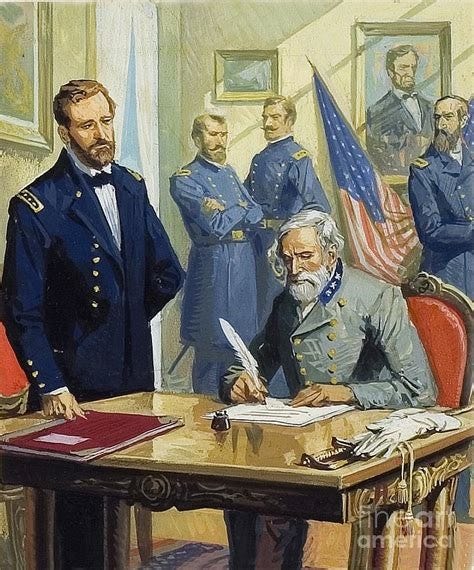
The Commonwealth of Virginia just gave America its greatest gift since Robert E. Lee surrendered his Confederate Army of Northern Virginia. Their state Supreme Court just declared that the recent Democrat redistricting of Virginia’s congressional districts was “unconstitutional.” At this point, Republicans should celebrate their win; but they should avoid getting greedy. Both sides should use the occasion to declare that active hostilities have ended. A ceasefire should be implemented.

In this war, the most recent battle started with Virginia. Oh, I know, prior to that, Republicans in Texas did their worst. That was followed by California Democrats. But, overall, the skirmish between the Lone Star and the Golden State was a “draw”. Both sides “flipped” roughly the same number of seats.
We could even go farther back. How about Republicans gerrymandering of North Carolina? Still farther? …. New York, New England, and Illinois for the Democrats. Meanwhile, in response to the Virginia referendum, but before that referendum was reversed, Florida and Tennessee dug deeper into the dirt.
Stop already! This gerrymandering war carries a similar dynamic to the war between the Israelis and Hamas… the Ukrainians and the Russians… the Bloods and the Crips… the Sharks and the Jets. Everyone keeps fighting because no one can agree on who is responsible for the original sin. As Maria discovered at the end of West Side Story, only when the fighting stops can there be peace.

With a little help from artificial intelligence, we can buy that peace in a few hours. It’s called “mathematical redistricting.” I wrote about it several months ago in my Substack column, “Rational Redistricting.” RLevy.Substack.com
Every 10 years, The Bureau of the Census divides each state into units of approximately 4000 people. These are called “census tracts.” Since there are approximately 760,000 people in each Congressional District, all that has to be done is to draw a non-political, mathematical pattern to map-out equal districts. I suggest the following:
Start from the Northeast corner of each state. From that point, the state’s first district begins with the “census tract” covering that area. The state then adds an arbitrary number of tracts, first West along the northern border, then South, next East and finally North to the southern edge of the first tract. That completes a “box.” The next box would be created South of the first box along the Eastern border. It would continue South of that point until the amount of people necessary to populate the district was reached. If 760,000 could not be achieved by the time the boxes touched the state’s Southern border, the boxes would continue to the West of the first “stripe”. The boxes would then continue North to the Northern border. It would all go South again if necessary. Where one district was fully populated, the next district would begin, etc., until the last district was completed at the state’s Western edge. The districts would have no predetermined artificial political or racial bias.
Some states have relied on commissions to try to do the same thing. It has been mostly a “fool’s errand.” No commission can be unbiased when commissioners are appointed by people who are biased in the first place. This was the lesson learned, especially with California’s “Independent” Redistricting Commission. But when districts are created by an arbitrary formula designing mathematically compact districts, elections become both unbiased by definition and competitive in practice.
Yeah, it will take time to enact such a restrictive program. Maybe some independently minded states will try it first. Still, it might be better done by a constitutional amendment or a constitutional convention. Perhaps the United States Supreme Court might even revisit the “one person one vote” ruling in Reynolds v. Sims. Perhaps The Court might agree: The only way to make sure that one person’s vote is equal to that of another is to mathematically rather than politically create legislative districts.

The earliest that any progress could be realized would be just after the 2030 census. So, for now, we should just call a truce. Any redistricting after Virginia, including Florida, Tennessee and Louisiana, ought to be postponed. The result of the dual redistricting in California and Texas is approximately equal. So, that should remain in place.
If we stop there, the parties will be in no better position nor any worse than they were in 2024. In that year, the Republicans won. The polls suggest that if, in 2026, there is an election using the same maps as in 2024, the Democrats might have an edge. But, who will win in 2026? No one really knows. It may just depend on the price of gas. For now, it’s a toss-up. And that uncertainty is what democracy should look like for now. In the future, mathematical redistricting should erase the current maps and ensure a truly unpredictable, competitive and therefore fair outcome for at least the next few decades.

Robert M. Levy Subscribe free: RLevy.substack.com

Robert M. Levy RLevy.Substack.com
Robert M. Levy PsyschodadRobert@gmail.com
Robert M. Levy grew up in Moore County and graduated from Pinecrest High School. He earned a BA in history and sociology from the University of North Carolina at Chapel Hill, where his honors thesis on the Wilmington Rebellion of 1898 became part of the university’s library collection.
Admitted to the California State Bar in 1978, Levy practiced law for 40 years in California and Maryland, focusing on family and criminal law, including work with juvenile offenders and abused children. His writing on affirmative action appeared in the San Fernando Valley Law Review, and he authored Divorce: A Cynical Experience. He later earned a North Carolina teaching certificate from UNC Charlotte and taught high school social studies across Moore County.
Levy has served as chairman of the Moore County School Board, president of the North Carolina Electoral College, chairman of the Moore County Republican Party, and a columnist for The Pilot in Southern Pines. He lives in Pinehurst with his wife, Linda, and they have three children and four grandchildren.
April 26, 2026
Republished with permission.
Want to submit an editorial for consideration? If you level up with Robert Levy’s quality, send your bio and proposal to editor@sandhills.news.
Subscribe to Sandhills News and support this conservative flagship journalism with advertising.
Submit news tips, events and interview requests to editor@sandhills.news.
Sandhills News is plain-English local government reporting that explains how decisions affect your land, taxes, schools and rights.


Subscribe to get the latest posts sent to your email.










 Sylvan Learning of Southern Pines NC is the investment you make for your child's sake. Education. https://sandhills.news/2025/12/07/sylvan-learning-of-southern-pines/11 months ago


 You can also follow on Instagram to see more.
Follow Sandhills News on Facebook and Instagram to learn the latest in Moore, Lee and Harnett.
We cover family-friendly news.12 months ago
Sandhills News will cover Five Points Horse Trials – Treehouse Event Series Championships today!
Carolina Horse Park, 2814, Montrose Road, Raeford, NC
Carolina Horse Park serves cross country, dressage, jumping and classes with a side of green biscuits from Sept. 5 through Sept. 7.
Love horses? This is where you can enjoy the show and the ambiance equestrians recognize as energy in the air when eventers pass by and revel in their accomplishments and neighs sound another moment of glory—unless they lose. In which case, barn language ensues.
Read the full schedule, plan your days and enjoy! Carolina Horse Park schedule for Sept. 5-7.
Food trucks will be on-site.1 year ago
Moore County Commissioners approve infrastructure upgrades in Pinehurst after Tropical Storm Chantal closed 13 roads and busted a dam in other towns in Moore County. https://sandhills.news/2025/07/16/moore-county-eyes-flooding-solutions-and-approves-1-2m-for-school-turf-projects-as-schools-face-budgets-cuts/1 year ago
Moore, Lee, and Harnett NC opioid settlement funds did not consider residential treatment for women. https://sandhills.news/2025/07/13/sandhills-opioid-funding-misses-the-mark-for-residential-treatment/1 year ago
 Harnett County Schools seek community support for student service-learning projects.
https://sandhills.news/2025/07/12/harnett-schools-service-learning-program-invites-community-support/1 year ago
 Angier is home to the Corner Grill and locals who know where to find HOMEMADE food!
https://sandhills.news/2025/07/12/locals-crave-the-corner-grills-chicken-salad-sandwich-and-cheesburgers/1 year ago
 Fred Lee IV wows the crowd at Kiwanis Park in Sanford, NC.
Book him for your next event.
https://sandhills.news/2025/07/14/fred-lee-iv-wins-the-crowd-at-kiwanis-park/1 year ago
Sandhills News loved the bagpipes in the 4 July 2025 Village of Pinehurst Parade!
See all the photos.
https://sandhills.news/2025/07/05/moore-pinehurst-and-whispering-pines-parades-highlight-community-spirit/1 year ago