
Palestine: already free
November 1, 2026


Balanced. Honest. Family-friendly.


Oct. 27, Dem. Governor Josh Stein addressed the General Baptist State Convention of North Carolina and addressed his affordable housing initiatives.
The press release reads:
“Together, we can build a state where everyone can thrive by strengthening public education, investing in good jobs and training, lowering the cost of living, and making sure that all voices are heard. That’s how we will build a safer, stronger, and more prosperous North Carolina.”
“Increasing access to affordable housing opportunities. Earlier this year, Governor Stein signed an executive order that directs cabinet agencies to work together to increase housing supply, affordability, and access and to use technology to deliver data-driven solutions. Governor Stein recently signed into law two bills that will cut red tape and make it easier to build more types of housing, including by reducing burdensome parking requirements, paving the way for innovation in factory-built housing, and allowing accessory dwelling units and housing near jobs in more places across the state.”
Affordable Housing
Stein’s May 2026 Executive Order 36 instructs state agencies to coordinate housing programs and streamline resource access.
The governor’s order notes a housing shortage of 764,000 units by 2029 and that half of renters spend over 30% of their income on housing.
An executive order can align agencies but will not build homes or lower rents automatically. Duplexes compete for renters, affecting pricing. The policy’s impact depends on implementation, construction costs, local land use, and housing affordability for lower-income households.
Citizens must wait to see if his initiatives built affordable housing or just more housing to facilitate a higher population density.
Some counties and municipalities are increasing opportunities for developers to spend less up front in fees for project proposals by rewriting Uniform Development Ordinances to allow development “by right,” so the developers may bypass quasi-judicial hearings, which help identify issues before disturbing land.
Read Moore County Commissioners override planning board’s subdivision rules to understand the impact.
The NC Chamber Foundation, in partnership with the North Carolina Home Builders Association and NC REALTORS helped fund the research study that produced the numbers supplied to Stein to make these decisions. Realtors make an approximate 6% commission off each real estate transaction. Therefore, bias is present in the study, in executive orders, legislation and trickles down into some local government UDO changes. Read the realtor’s study here.
The study posits, “The [housing] gap is expected to increase with projected job and population growth, and if addressed, could generate $489 billion in economic activity and nearly 2.2 million jobs.”
To understand bias in research studies, consider a best candy bar study conducted by the company that declares the milk chocolate, dried strawberry candy bar as the winner in the taste tests conducted by, you guessed it, The Chocolate Strawberry Company.
More Housing. Period.
Senate Bill 445 mandates certain North Carolina cities to permit one accessory dwelling unit (ADU) on qualifying single-family lots. ADUs must follow the North Carolina Residential Code. The change might enable more homes on current residential lots, possibly boosting demand for utilities and services.
House Bill 162 restricts local governments from mandating minimum off-street parking for developments, with some exceptions. This change may cut developers’ parking land, yet communities need to evaluate traffic and parking consequences.
Senate Bill 445 mandates local governments to publish fee schedules, give estimates, and issue final statements. The requirements aim to provide builders with clearer cost predictability. They don’t remove all development fees.
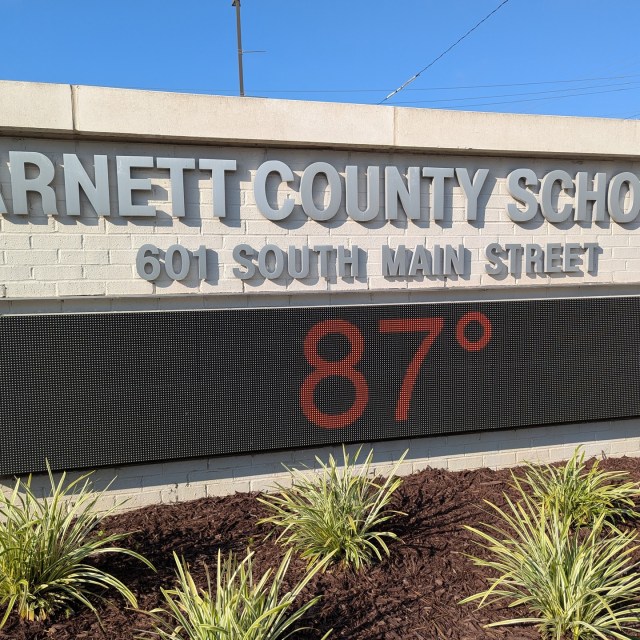
Harnett County has embraced Stein’s ideology, a county already facing dire infrastructure needs. Read about their actions here.
Lee County and Sanford have long histories of approving rezoning, satellite annexations and are now competing with other regions for industry. Drive down a county road and expect to see a manufacturing plant amid the rural landscape. Read about recent incentives here and about the planning board’s plans to extend commercial industry down a pristine rural road. Read Sanford approves $11M incentive for $600M medical project, advances Tramway growth toward Bruce Coggins Road.

Lee County has enabled bias with self-interested parties on its development boards for generations: realtors, investors and developers. Jimmy Randolph with the Sanford Area Growth Alliance said they cannot stop conflict of interest on their board.
Stein has facilitated growth based on a study by the NC Realtors’ Association.
English and journalism instructors identify this as bias because realtors push ideas that grow their personal wealth.
The only prevention is a change in government, and it is too late for this year’s election. However, the time is now to prepare.

Read Editorial: Data centers, rural development, & property rights: what to know before voting.
Send editorials on proposed solutions to slow growth to editor@sandhills.news. Include short bios and your image for consideration.
We’d love to publish a solution to keeping rural areas rural, farms in operation and infrastructure balanced with growth.
Nov. 1, 2026
Stephanie M. Sellers
Subscribe to Sandhills News and support this conservative journalism with advertising.
Submit news tips, events and interview requests to editor@sandhills.news.
Sandhills News is plain-English local government reporting that explains how decisions affect your land, taxes, schools and rights.


Subscribe to get the latest posts sent to your email.









 Sylvan Learning of Southern Pines NC is the investment you make for your child's sake. Education. https://sandhills.news/2025/12/07/sylvan-learning-of-southern-pines/11 months ago


 You can also follow on Instagram to see more.
Follow Sandhills News on Facebook and Instagram to learn the latest in Moore, Lee and Harnett.
We cover family-friendly news.12 months ago
Sandhills News will cover Five Points Horse Trials – Treehouse Event Series Championships today!
Carolina Horse Park, 2814, Montrose Road, Raeford, NC
Carolina Horse Park serves cross country, dressage, jumping and classes with a side of green biscuits from Sept. 5 through Sept. 7.
Love horses? This is where you can enjoy the show and the ambiance equestrians recognize as energy in the air when eventers pass by and revel in their accomplishments and neighs sound another moment of glory—unless they lose. In which case, barn language ensues.
Read the full schedule, plan your days and enjoy! Carolina Horse Park schedule for Sept. 5-7.
Food trucks will be on-site.1 year ago
Moore County Commissioners approve infrastructure upgrades in Pinehurst after Tropical Storm Chantal closed 13 roads and busted a dam in other towns in Moore County. https://sandhills.news/2025/07/16/moore-county-eyes-flooding-solutions-and-approves-1-2m-for-school-turf-projects-as-schools-face-budgets-cuts/1 year ago
Moore, Lee, and Harnett NC opioid settlement funds did not consider residential treatment for women. https://sandhills.news/2025/07/13/sandhills-opioid-funding-misses-the-mark-for-residential-treatment/1 year ago
 Harnett County Schools seek community support for student service-learning projects.
https://sandhills.news/2025/07/12/harnett-schools-service-learning-program-invites-community-support/1 year ago
 Angier is home to the Corner Grill and locals who know where to find HOMEMADE food!
https://sandhills.news/2025/07/12/locals-crave-the-corner-grills-chicken-salad-sandwich-and-cheesburgers/1 year ago
 Fred Lee IV wows the crowd at Kiwanis Park in Sanford, NC.
Book him for your next event.
https://sandhills.news/2025/07/14/fred-lee-iv-wins-the-crowd-at-kiwanis-park/1 year ago
Sandhills News loved the bagpipes in the 4 July 2025 Village of Pinehurst Parade!
See all the photos.
https://sandhills.news/2025/07/05/moore-pinehurst-and-whispering-pines-parades-highlight-community-spirit/1 year ago


