
Can student growth replace teacher licensing? Questions about accountability, unearned grades and North Carolina’s future workforce.
October 25, 2026


Balanced. Honest. Family-friendly.

 There’s genocide in black Africa! Do African-Americans care?
October 25, 2026
 A public execution…smart? stupid? or just immoral?
October 16, 2026
 Will data centers deplete the abundance of our barbecue?
October 11, 2026

The State Board of Education is contemplating the elimination of traditional teacher licensing in favor of licensure based on demonstrated student growth, which could negatively impact students and the future workforce.
How will the state determine mastery from improved grades or course-completion rates? As the methods employed are easily exploited to demonstrate student growth.
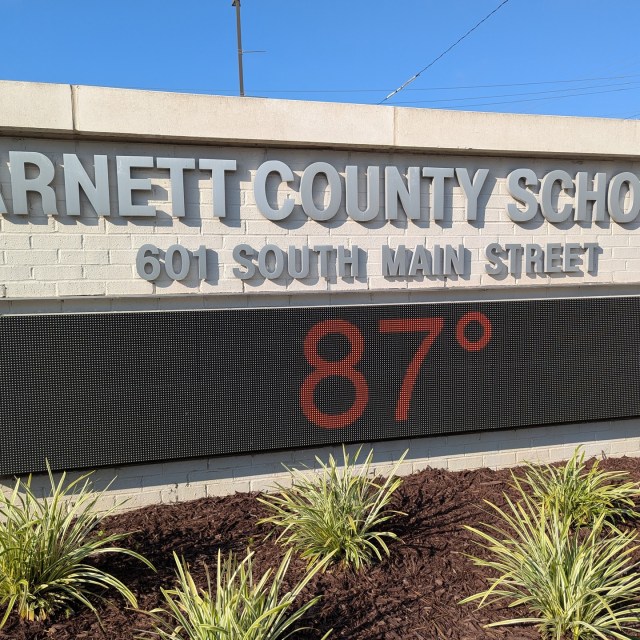
For example, Moore, Lee and Harnett counties allow teachers to award unearned points for zero student work to prevent them from failing.
Lee and Harnett allow teachers full autonomy for the practice of awarding 50 unearned points.
Moore County has a newly updated policy. With the new lower passing score of 60, the board lowered the grading floor to 40 unearned points.
A concern for not awarding points to keep students from failing is that a student who knows he will not pass may become a behavioral problem.

A concern for awarding points is that the practice does not prepare students for real life. And the practice of unearned points increases the school district’s graduation rates to make them look great to county commissioners who help fund schools and to the state instead of instilling work ethics into young minds.
What boss is going to keep an employee who does not perform?
North Carolina is poised to become the most populated state by 2030. Counties compete for industrial enterprises for their property taxes and employment opportunities. Industries investigating new locations must consider the human capital, which may be further compromised.
Caution: The following information may change minds about teaching and reaching students for genuine growth.
Watch the two-month-old video to learn how infrastructure from neighboring counties perpetuates growth and facilitates counties and municipalities approving projects. For Angier and Fuquay-Varina, this meant whopping population booms from deliberate growth.
It may be a concern that growing human capital too “slow” to count change may slow population growth because industries will skip areas with North Carolina’s teacher licensure ideas.
The state’s idea is certainly not an answer for teacher retention. The state is not excelling in teacher pay, which would help retain qualified teachers who may quit the profession for a position where they are respected and appropriately compensated.

“State panel considers dropping exam for full teacher license” by David N. Bass, published Oct. 25, 2026, in The Carolina Journal, explains the state’s alternative licensure idea.
A State Board of Education task force rewriting how North Carolina licenses teachers is leaning toward letting teachers earn a full license without passing the state licensing exam. Teachers could instead qualify by showing student growth on state tests or strong evaluations from their principal.
The Task Force on Educator Licensure and Advancement met in person for the first time Oct. 20 at the Department of Public Instruction (DPI) to discuss the ideas.
The exam is the last step between a new teacher and a full license that is good in any district. At the same meeting, DPI presented data showing that the state’s largest group of new teachers now enters on one-year temporary licenses that require only a bachelor’s degree and a few college courses.
Tom Tomberlin — DPI’s senior director of educator preparation, licensure, and performance — told the task force the exam does not predict classroom results.
“The test doesn’t tell you anything about whether a teacher is going to be effective or not,” Tomberlin said. “It’s just not correlated.”
Sen. Tom McInnis, R-Moore, said the General Assembly wants a quality teacher in every classroom instead of a permanent substitute.
“So, our goal is to have that quality teacher in the classroom every day and for that person not to be hindered by some stupid test that only proves they’re a good test taker,” McInnis said. “I can assure you that the General Assembly’s goal at the end of the day is not to lower standards, but to lower thresholds and stops to keep a quality teacher from being in the classroom.”
McInnis was a primary sponsor of a bill this year that lets the state board grant a full license to teachers on a limited license, which districts use for teachers who have not passed the exam, if their students show positive growth in two of the three most recent years. The bill also dropped the requirement that new teachers attempt the exam in their first year. Lawmakers included both provisions in the state budget, which became law in July.
Under the idea the task force discussed, the exam would become one option on a list for every teacher. The consultant DPI hired to facilitate the task force summarized it this way: “It’s not a different license. It’s a different means of qualification for the same license.” She said she saw consensus for the idea.
Tomberlin cautioned that most teachers do not have growth scores from the state’s EVAAS system. “EVAAS would only cover about 40 to 50% of your teachers,” he said.
DPI issued 6,016 emergency licenses and 3,281 permits to teach in 2024-25, Tomberlin said. Both licenses were created in 2019. Teachers on those licenses now make up 30% to 40% of new hires, more than graduates of traditional teacher-training programs, who make up 25% to 30%.
“It is no longer the emergency,” the facilitator said. “It’s almost the norm.”
One member said the permit to teach has become easy to get. “As long as you have a degree and you’re breathing, you can get one,” the member said.
Tomberlin said teachers who start on the temporary licenses post lower student growth than traditionally trained teachers in their first year, and they leave sooner.
“When you start out on one of those temporary licenses, you wind up attriting by the end of year five at a rate of 55%,” he said. “We’ve lost over half of them by the fifth year. When they come through the residency route, we lose 40% of them.”
Teachers who enter on a residency license, which requires enrolling in a training program while teaching, did as well as traditional graduates in their first year and better after finishing their program, Tomberlin said. Traditionally prepared teachers leave at a rate of 37% by year five.
“Folks who are on a permit to teach, only 55% of them move to the next license; 45% of them abandon the license after one year,” he said.
Tomberlin said districts increasingly put candidates who already qualify for a residency license on a temporary license instead to buy time.
“So, it’s been used as a time extender and not as a careful deliberate scaffolding to that residency license,” he said.
There is no pay increase for earning the full license. The only benefit is that the license transfers to any district in the state.
The task force will not meet again until 2027. The facilitator will send members a summary of the meeting within two weeks and collect responses by mid-December. Recommendations would go to the state board and then to the legislature.
The Carolina Journal is free to read.
Oct. 25, 2026
(Opening Commentary) Stephanie M. Sellers
(Shared Content) “State panel considers dropping exam for full teacher license” by David N. Bass, published Oct. 25, 2026, in The Carolina Journal, is open access.
Subscribe to Sandhills News and support this conservative journalism with advertising.
Submit news tips, events and interview requests to editor@sandhills.news.
Sandhills News is plain-English local government reporting that explains how decisions affect your land, taxes, schools and rights.


Subscribe to get the latest posts sent to your email.









 Sylvan Learning of Southern Pines NC is the investment you make for your child's sake. Education. https://sandhills.news/2025/12/07/sylvan-learning-of-southern-pines/10 months ago


 You can also follow on Instagram to see more.
Follow Sandhills News on Facebook and Instagram to learn the latest in Moore, Lee and Harnett.
We cover family-friendly news.12 months ago
Sandhills News will cover Five Points Horse Trials – Treehouse Event Series Championships today!
Carolina Horse Park, 2814, Montrose Road, Raeford, NC
Carolina Horse Park serves cross country, dressage, jumping and classes with a side of green biscuits from Sept. 5 through Sept. 7.
Love horses? This is where you can enjoy the show and the ambiance equestrians recognize as energy in the air when eventers pass by and revel in their accomplishments and neighs sound another moment of glory—unless they lose. In which case, barn language ensues.
Read the full schedule, plan your days and enjoy! Carolina Horse Park schedule for Sept. 5-7.
Food trucks will be on-site.1 year ago
Moore County Commissioners approve infrastructure upgrades in Pinehurst after Tropical Storm Chantal closed 13 roads and busted a dam in other towns in Moore County. https://sandhills.news/2025/07/16/moore-county-eyes-flooding-solutions-and-approves-1-2m-for-school-turf-projects-as-schools-face-budgets-cuts/1 year ago
Moore, Lee, and Harnett NC opioid settlement funds did not consider residential treatment for women. https://sandhills.news/2025/07/13/sandhills-opioid-funding-misses-the-mark-for-residential-treatment/1 year ago
 Harnett County Schools seek community support for student service-learning projects.
https://sandhills.news/2025/07/12/harnett-schools-service-learning-program-invites-community-support/1 year ago
 Angier is home to the Corner Grill and locals who know where to find HOMEMADE food!
https://sandhills.news/2025/07/12/locals-crave-the-corner-grills-chicken-salad-sandwich-and-cheesburgers/1 year ago
 Fred Lee IV wows the crowd at Kiwanis Park in Sanford, NC.
Book him for your next event.
https://sandhills.news/2025/07/14/fred-lee-iv-wins-the-crowd-at-kiwanis-park/1 year ago
Sandhills News loved the bagpipes in the 4 July 2025 Village of Pinehurst Parade!
See all the photos.
https://sandhills.news/2025/07/05/moore-pinehurst-and-whispering-pines-parades-highlight-community-spirit/1 year ago


