Will data centers deplete the abundance of our barbecue?
October 11, 2026


Balanced. Honest. Family-friendly.

Robert M. Levy

Along the western edge of Eastern North Carolina, where the Coastal Plain meets the Piedmont, there is a suburban city called Sanford. It is a part of Lee County, a place which is quickly becoming a microcosm of the national debate over “the environment.” No, it has nothing to do with greenhouse gas, endangered owls, or disappearing tadpoles. It has everything to do with an environment where an ambiance and lifestyle is being surrendered to an annoying “growth spurt.”
Lee County adjoins the Raleigh-Cary Metropolitan Statistical Area, a conglomerate of towns and cities totaling about 1.6 million people. This Raleigh-Cary area is blessed with good jobs, high salaries, and abundant sushi bars. It boasts an annual median family income over $100,000 per year.

Meanwhile, adjoining Lee County has about 70,000 people with roughly 30,000 in its main city of Sanford. Sure, there’s some nightlife. There are some good jobs, too. But it’s a quiet area where many more people are interested in pulled pork barbecue than blue fin sushi. In spite of a median annual family income of just $65,000, many people in Lee County don’t want the $100k environment of Raleigh. They prefer to keep their barbecue to sushi ratio constant.
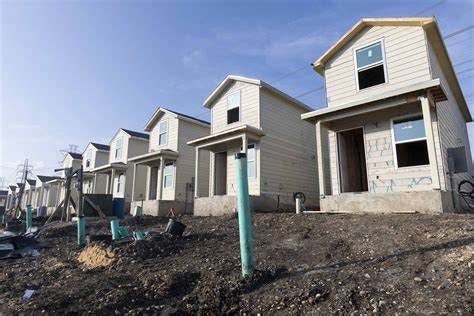
It’s not a new story. Especially after World War II, many Americans turned their swords back into plowshares. But it didn’t last. They then exchanged their plowshares for bulldozers. Those bulldozers became subdivisions and strip malls. It was all called “progress,” but many didn’t call it “good.” In Lee County and elsewhere, many people still don’t understand the “good” in much of it.
But many, probably most local politicians want the growth the bulldozers bring. They subscribe to the popular political wisdom: “It’s the economy, stupid!” A $100,000 salary is better than a $70,000 salary. So, they welcome the bulldozers and extol the new jobs. They relegate concerns about the dust and traffic to a nondescript can capable of being kicked down an equally nondescript road. For now, they believe that the best way to keep their jobs is to keep the juggernaut of development going strong.
Or are the road conditions changing? Many believe that this proverbial can has been kicked far enough. Regardless of the money, they want that juggernaut slowed down or stopped.
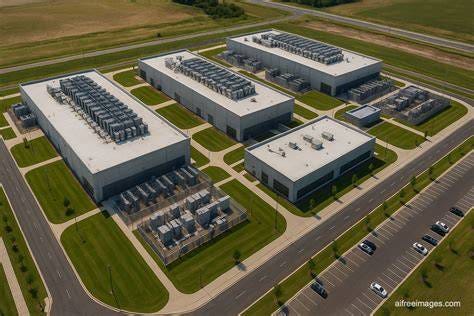
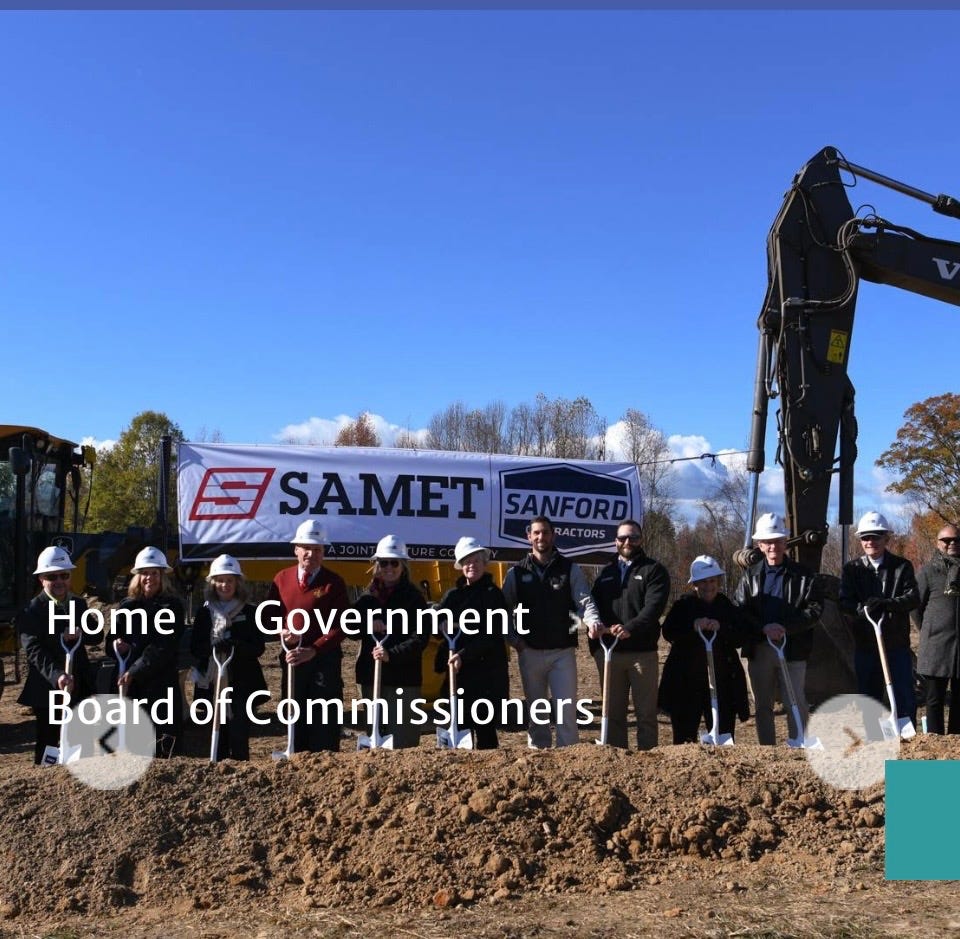
As in many communities, the rise of a data center spurred many Lee County residents to action. Meanwhile, that turned out to be only one concern out of many. The people even questioned a previously lauded $1 billion industrial expansion by Caterpillar, one of the area’s oldest employers. Beyond the jobs and beyond the salaries, “What are the environmental and economic costs?” they asked.

The City of Sanford and County of Lee gave Caterpillar an approximate $85.5 million combined 10-year tax and incentive subsidy to make their expansion happen. The $8.55 million annual cost represented roughly 9% of the approximate $93.4 million in property taxes (ad valorem taxes) collected by the city and county each year. It would more than double city and county combined expenditures of about $6 million per year for “community and economic development.“
Is it a good investment? Many would say it is. The press releases predict the creation of good-paying jobs in an area which could probably use them. But the public concern is not that specific. An area more comfortable with hunting, fishing, and its less intrusive, more traditional, clay soil brick industry is just as concerned about shifting its long-standing foundation… even as “the winds of change shift.”

Between 2017 and 2022, Lee County lost 27% of its farmland. It’s still losing acreage daily. And many don’t like what they see. They’re letting their voices be heard in crowded public meetings and on the telegraph of social media.
Still, most politicians refuse to change course. Just this past week, county commissioners denied a data center moratorium. And so, the saga plays on…

Perhaps it is all inevitable. The steamship replaced the sailboat, the car replaced the horse and now marginally profitable farms are being replaced by immensely profitable data centers. Perhaps, those who object are just a modern group of Luddites seeking to preserve that which progress requires us to abandon. However, as places like Lee County seek to sort it all out, public concern is mounting.
Will this “environmental” issue ever be addressed? It may all just depend on whether a rising salary base combined with more abundant sushi can mitigate the concerns of lost farmland and a growing scarcity of pulled pork barbecue. The election of many politicians both in Lee County, North Carolina, and in less urbanized areas throughout the nation may depend on the voters’ response to that issue.

Roberta M. Levy
http://robertreports.substack.com/
Robert M. Levy grew up in Moore County and graduated from Pinecrest High School. He earned a BA in history and sociology from the University of North Carolina at Chapel Hill, where his honors thesis on the Wilmington Rebellion of 1898 became part of the university’s library collection.
Admitted to the California State Bar in 1978, Levy practiced law for 40 years in California and Maryland, focusing on family and criminal law, including work with juvenile offenders and abused children. His writing on affirmative action appeared in the San Fernando Valley Law Review, and he authored Divorce: A Cynical Experience. He later earned a North Carolina teaching certificate from UNC Charlotte and taught high school social studies across Moore County.
Levy has served as chairman of the Moore County School Board, president of the North Carolina Electoral College, chairman of the Moore County Republican Party, and a columnist for The Pilot in Southern Pines. He lives in Pinehurst with his wife, Linda, and they have three children and four grandchildren.
Want to submit an editorial for consideration? If you level up with Robert Levy’s quality, send your bio and proposal to editor@sandhills.news.
Subscribe to Sandhills News and support this conservative journalism with advertising.
Submit news tips, events and interview requests to editor@sandhills.news.
Sandhills News is plain-English local government reporting that explains how decisions

Subscribe to get the latest posts sent to your email.









 Sylvan Learning of Southern Pines NC is the investment you make for your child's sake. Education. https://sandhills.news/2025/12/07/sylvan-learning-of-southern-pines/10 months ago

 You can also follow on Instagram to see more.
Follow Sandhills News on Facebook and Instagram to learn the latest in Moore, Lee and Harnett.
We cover family-friendly news.11 months ago
Sandhills News will cover Five Points Horse Trials – Treehouse Event Series Championships today!
Carolina Horse Park, 2814, Montrose Road, Raeford, NC
Carolina Horse Park serves cross country, dressage, jumping and classes with a side of green biscuits from Sept. 5 through Sept. 7.
Love horses? This is where you can enjoy the show and the ambiance equestrians recognize as energy in the air when eventers pass by and revel in their accomplishments and neighs sound another moment of glory—unless they lose. In which case, barn language ensues.
Read the full schedule, plan your days and enjoy! Carolina Horse Park schedule for Sept. 5-7.
Food trucks will be on-site.1 year ago
Moore County Commissioners approve infrastructure upgrades in Pinehurst after Tropical Storm Chantal closed 13 roads and busted a dam in other towns in Moore County. https://sandhills.news/2025/07/16/moore-county-eyes-flooding-solutions-and-approves-1-2m-for-school-turf-projects-as-schools-face-budgets-cuts/1 year ago
Moore, Lee, and Harnett NC opioid settlement funds did not consider residential treatment for women. https://sandhills.news/2025/07/13/sandhills-opioid-funding-misses-the-mark-for-residential-treatment/1 year ago
You can also follow on Instagram to see more.
Follow Sandhills News on Facebook and Instagram to learn the latest in Moore, Lee and Harnett.
We cover family-friendly news.11 months ago
Sandhills News will cover Five Points Horse Trials – Treehouse Event Series Championships today!
Carolina Horse Park, 2814, Montrose Road, Raeford, NC
Carolina Horse Park serves cross country, dressage, jumping and classes with a side of green biscuits from Sept. 5 through Sept. 7.
Love horses? This is where you can enjoy the show and the ambiance equestrians recognize as energy in the air when eventers pass by and revel in their accomplishments and neighs sound another moment of glory—unless they lose. In which case, barn language ensues.
Read the full schedule, plan your days and enjoy! Carolina Horse Park schedule for Sept. 5-7.
Food trucks will be on-site.1 year ago
Moore County Commissioners approve infrastructure upgrades in Pinehurst after Tropical Storm Chantal closed 13 roads and busted a dam in other towns in Moore County. https://sandhills.news/2025/07/16/moore-county-eyes-flooding-solutions-and-approves-1-2m-for-school-turf-projects-as-schools-face-budgets-cuts/1 year ago
Moore, Lee, and Harnett NC opioid settlement funds did not consider residential treatment for women. https://sandhills.news/2025/07/13/sandhills-opioid-funding-misses-the-mark-for-residential-treatment/1 year ago Harnett County Schools seek community support for student service-learning projects.
https://sandhills.news/2025/07/12/harnett-schools-service-learning-program-invites-community-support/1 year ago
Harnett County Schools seek community support for student service-learning projects.
https://sandhills.news/2025/07/12/harnett-schools-service-learning-program-invites-community-support/1 year ago Angier is home to the Corner Grill and locals who know where to find HOMEMADE food!
https://sandhills.news/2025/07/12/locals-crave-the-corner-grills-chicken-salad-sandwich-and-cheesburgers/1 year ago
Angier is home to the Corner Grill and locals who know where to find HOMEMADE food!
https://sandhills.news/2025/07/12/locals-crave-the-corner-grills-chicken-salad-sandwich-and-cheesburgers/1 year ago Fred Lee IV wows the crowd at Kiwanis Park in Sanford, NC.
Book him for your next event.
https://sandhills.news/2025/07/14/fred-lee-iv-wins-the-crowd-at-kiwanis-park/1 year ago
Sandhills News loved the bagpipes in the 4 July 2025 Village of Pinehurst Parade!
See all the photos.
https://sandhills.news/2025/07/05/moore-pinehurst-and-whispering-pines-parades-highlight-community-spirit/1 year ago
Fred Lee IV wows the crowd at Kiwanis Park in Sanford, NC.
Book him for your next event.
https://sandhills.news/2025/07/14/fred-lee-iv-wins-the-crowd-at-kiwanis-park/1 year ago
Sandhills News loved the bagpipes in the 4 July 2025 Village of Pinehurst Parade!
See all the photos.
https://sandhills.news/2025/07/05/moore-pinehurst-and-whispering-pines-parades-highlight-community-spirit/1 year ago